1.Introduction
In process automation industries such as petrochemical, thermal power generation, metallurgy, water treatment, and new energy, the measurement stability and accuracy of differential pressure transmitters directly influence process control performance and operational cost management.
As a critical front-end measurement device for flow measurement, level measurement, medium density measurement, and differential pressure monitoring, the FRD Sensor FD3051SDP Smart Differential Pressure Transmitter is designed for long-term operation in demanding industrial environments, including high static pressure, wide temperature fluctuations, continuous mechanical vibration, and corrosive process media.
However, system integrators, plant maintenance engineers, and industrial procurement professionals worldwide often face a costly field challenge: differential pressure transmitters may experience gradual or sudden measurement drift, accuracy degradation, and unstable signal output during operation.
When a smart single-crystal silicon differential pressure transmitter suffers from accuracy deterioration or zero-point drift, the impact can extend throughout the entire automation control system. Process control loops may deviate from their target values, raw material consumption may increase unexpectedly, and inaccurate measurement data may lead to unnecessary alarms or shutdowns.
Long-term temperature effects and static pressure influences without proper compensation can accelerate sensing diaphragm fatigue, sealing component aging, and electronic parameter deviation, significantly reducing the overall service life and reliability of the instrument.
To identify the root causes behind measurement instability in high-precision transmitters, maintenance engineers need a comprehensive understanding of three key technologies: single-crystal silicon sensing technology, digital temperature and static pressure compensation algorithms, and precision sensor packaging technology.
2.Why Choose This Model?
By integrating in-house developed sensing technology, reliable sealing structures, and digital compensation technologies, the transmitter provides comprehensive solutions for challenges related to field measurement accuracy, maintenance efficiency, and complex operating condition adaptability.Key advantages include:
1)Solve Long-Term Accuracy Drift and Improve Measurement Stability
During long-term operation, conventional differential pressure transmitters may experience zero-point drift and range deviation due to factors such as sensor aging, environmental changes, and electronic component variation. These issues may require frequent recalibration, increasing maintenance workload and affecting production continuity.
The FRD Sensor FD3051SDP Smart Differential Pressure Transmitter adopts a high-stability single-crystal silicon sensing element combined with advanced digital temperature compensation and static pressure compensation technologies, effectively reducing measurement deviations during long-term operation.
With excellent repeatability and long-term stability, the FD3051SDP maintains reliable measurement performance under continuous industrial operating conditions, reduces calibration frequency, lowers maintenance costs, and improves production efficiency.
2)Solve Measurement Errors Caused by Temperature Variations
In industrial environments, changes in ambient temperature and process media temperature can affect differential pressure measurement accuracy. Conventional transmitters may experience increased measurement deviations under complex temperature conditions, affecting the stability of automatic control systems.
The FRD Sensor FD3051SDP utilizes intelligent temperature compensation and static pressure compensation algorithms to effectively correct the influence of temperature fluctuations and static pressure variations.
The transmitter maintains stable output performance across a wide operating temperature range, providing reliable process measurement solutions for industries such as petrochemical, power generation, chemical processing, and new energy.
3) Improve Sealing Reliability and Reduce Leakage and Environmental Risks
Industrial environments often involve pressure fluctuations, corrosive process media, and changing humidity conditions. If conventional instruments have insufficient sealing performance, problems such as seal degradation, internal moisture ingress, and unstable measurement may occur.
The FRD Sensor FD3051SDP adopts a reliable sealing structure design and mature manufacturing processes to enhance environmental adaptability.
Its optimized protection design improves long-term operational reliability and enables stable performance in complex industrial environments.
4)Solve Signal Fluctuation Problems in High-Vibration Environments
In industries such as power generation, chemical processing, and mining, equipment vibration may affect transmitter stability, causing output fluctuations and impacting automatic control system decisions.
The FRD Sensor FD3051SDP features a high-reliability structural design and optimized sensor packaging technology, providing excellent vibration resistance.
Even under continuous vibration conditions, it maintains stable signal output and meets the measurement requirements of demanding industrial applications.
5)Improve Low Differential Pressure Measurement Capability for Precise Process Control
Some conventional transmitters may suffer from limited resolution and poor linearity when measuring low differential pressure, low flow rates, or small level variations, resulting in reduced measurement accuracy.
The FRD Sensor FD3051SDP provides high-resolution differential pressure measurement capability with excellent linearity, meeting the requirements of precision process control applications.
It is widely used in industries such as chemical processing, pharmaceuticals, energy, and water treatment where high measurement accuracy is required.
6)Support Intelligent Communication and Enable Digital Industrial Upgrades
Traditional analog instruments have limited communication capabilities and cannot fully meet the requirements of modern smart factories for remote monitoring, parameter configuration, and equipment management.
The FRD Sensor FD3051SDP supports standard 4-20mA output and can be configured with HART digital communication functions, enabling:
- Remote parameter configuration
- Device status monitoring
- Fault diagnosis and analysis
- Intelligent system integration
It helps enterprises accelerate automation upgrades and achieve more efficient digital production management.
7)Reduce Maintenance Frequency and Improve Operational Efficiency
Frequent maintenance and instrument replacement can increase operational costs and affect production efficiency.
The FRD Sensor FD3051SDP adopts a mature and reliable structural design, high-stability sensing technology, and strict manufacturing quality control processes to meet the requirements of long-term industrial operation.
By improving equipment reliability, reducing maintenance workload, and minimizing spare parts consumption, the FD3051SDP helps users reduce overall operating costs and enhance production system stability.
3.Model Comparison Table
| Parameter |
FRD Sensor FD3051SDP Smart Differential Pressure Transmitter |
FRD Sensor FD3051ST Smart Pressure Transmitter |
| Range |
0-0.1kPa ~ 3MPa |
0-0.1kPa~40MPa |
| Accuracy |
±0.05%FS, ±0.075%FS, 0.1%FS, 0.2(0.25)%FS, 0.5%FS (at 25℃, full scale) |
±0.05%FS, ±0.075%FS, 0.1%FS, 0.2(0.25)%FS, 0.5%FS (at 25℃, full scale) |
| Output Signal |
Two-wire system (4~20)mA with superimposed digital protocol (HART), RS485 protocol |
Two-wire system (4~20)mA with superimposed digital protocol (HART), RS485 protocol |
| Process Medium |
Liquids, gases, or steam |
Liquids, gases, or steam |
| Power Supply |
((12~32)VDC (24VDC recommended) |
(12–32) VDC (24 VDC recommended) |
| Ambient Temperature |
-40℃ to 80℃ |
-40℃ to 80℃ |
| Stability |
≤0.1% URL / 3 years |
≤0.1% URL / 3 years |

4.FRD Sensor FD3051SDP OEM & ODM Customization Services
FRD Sensor provides professional OEM & ODM customization services for the FD3051SDP Smart Differential Pressure Transmitter, offering flexible measurement and integration solutions based on customers’ specific application requirements.
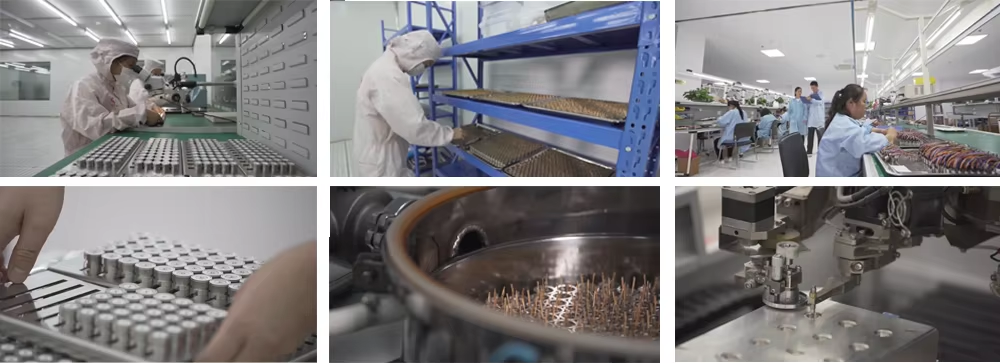
With independently developed single-crystal silicon sensing technology, digital compensation algorithms, and precision manufacturing capabilities, FRD Sensor meets the customized needs of global system integrators, equipment manufacturers, and industrial customers.
Customized Measurement Solutions
Supports customized measurement ranges, accuracy levels, and performance configurations for applications including:
- Flow measurement
- Level measurement
- Filter differential pressure monitoring
- Industrial process control
Communication & System Integration Customization
Supports multiple communication options:
- 4–20 mA output
- HART digital communication
- RS485 communication
Compatible with automation systems such as PLC and DCS for efficient system integration.
Structural & Application Environment Customization
Provides customized solutions based on field requirements, including:
- Process connection customization
- Installation structure optimization
- Special environment adaptation
Suitable for demanding industrial applications involving high temperature, low temperature, corrosive media, and high vibration conditions.
Branding & Manufacturing Support
Provides:
- Logo and nameplate customization
- Packaging customization
- Technical documentation support
- Mass production services
FRD Sensor is committed to providing reliable and high-performance differential pressure measurement solutions for customers worldwide.
5.FRD Sensor FD3051SDP Differential Pressure Transmitter Measurement Accuracy Troubleshooting Guide
When the FRD Sensor FD3051SDP Smart Differential Pressure Transmitter experiences issues such as measurement drift, value deviation, signal fluctuation, or accuracy degradation, engineers can follow the standardized troubleshooting process below to quickly identify the root cause and complete maintenance.
Power Supply & Configuration Check → Impulse Line System Inspection → Zero Point & Compensation Verification → Sensing Element & Electronic Module Inspection
Stage 1: Check Power Supply and Configuration Parameters
First, confirm that the field power supply and system configuration are operating normally.
Key inspection items include:
- Loop power supply voltage;
- Range settings;
- Configuration parameters;
- HART/RS485 communication settings.
Abnormal power supply, incorrect parameter settings, or wiring issues may cause output fluctuations, abnormal response, or measurement deviations.
Stage 2: Inspect Impulse Lines and Installation Conditions
Check the high-pressure and low-pressure impulse lines, three-valve manifold, and installation conditions:
- Whether the impulse lines are blocked, leaking, or filled with liquid;
- Whether valve conditions are normal;
- Whether connections are properly sealed;
- Whether installation misalignment or mechanical stress exists.
Abnormalities in the impulse system are one of the common causes of differential pressure measurement errors.
Stage 3: Verify Zero Point and Temperature/Static Pressure Compensation Performance
Use standard calibration equipment to check:
- Zero output;
- Range accuracy;
- Temperature compensation;
- Static pressure compensation parameters.
The FRD Sensor FD3051SDP adopts single-crystal silicon sensing technology and digital temperature/static pressure compensation algorithms, effectively reducing the impact of environmental variations on measurement accuracy.
Stage 4: Inspect the Sensing Element and Electronic Module
When the external system and impulse lines are confirmed to be normal but measurement issues still remain, further inspection is required for:
- Single-crystal silicon sensing element condition;
- Sealing structure reliability;
- Electronic module stability.
By checking the sensing element, sealing system, and electronic components, the root cause of instrument failure can be accurately identified.
6.Application Scenarios
7.Product Certifications
8.Product Drawing
9.Packing

10.FAQ
Q: How soon can you arrange your production?
A: Once getting your product confirmation and receiving the prepayment, the production will be started immediately.
Q: How long is the delivery time for the product?
A: We will provide a specific delivery time based on your order quantity. For orders of 1 to 30 pcs, the delivery time is approximately 2 to 5 working days.
Q: How do you control your quality ?
A: Full inspection process (Incoming Material Screening, Process Control, and Performance Verification) to ensure quality + good warranty service(1 year free to change a new one without any human damage factors).
Q: What certificates do you have ?
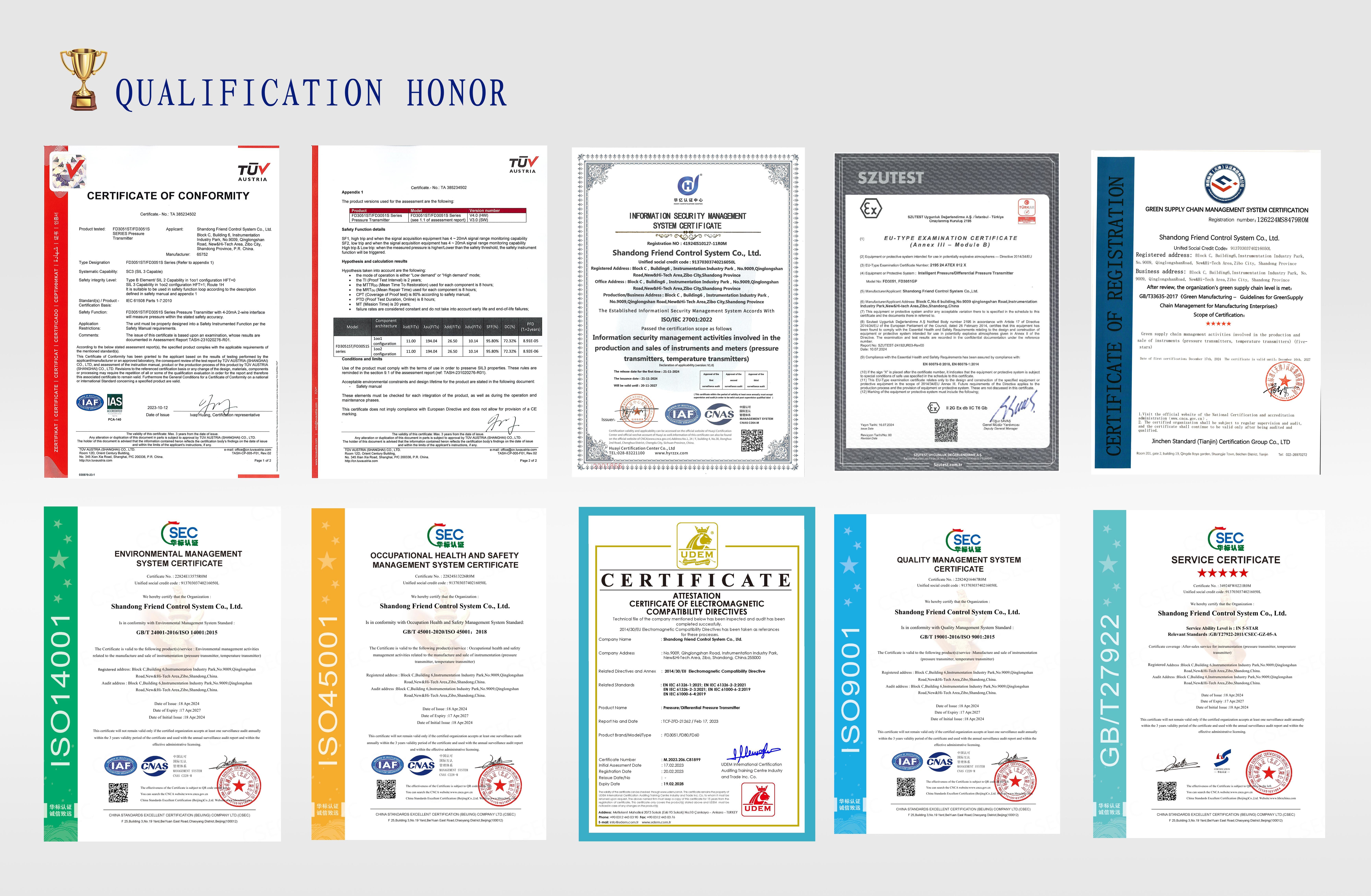
A: We hold 6 invention patents, possess certifications for CE, ATEX, and SIL, and are a member of the HART Protocol. And before the delievry of goods, quality and safety inspection certification issued by third parts also can be offered.
Q: What's your warranty terms?
A: We offer 12 months warranty time.
Q: Can you provide ODM/OEM & Customized service?
A: Yes, OEM and ODM are both available, we have the professional R&D dept which can provide professional solutions for you.